Pallet Shuttle Systems offer several clear advantages for bulk storage in modern warehouses. These systems help businesses achieve up to 80-90% space utilization, reduce operator injury potential, and cut labor requirements. Key benefits include:
Increased storage density for more efficient use of warehouse space
Enhanced safety by lowering collision risks
Faster throughput, with up to 40% quicker cycle times
Improved inventory control and stock rotation
Flexible operations that adapt to changing inventory needs
Lower infrastructure and energy costs
Reduced product damage during handling
These advantages make a Pallet Shuttle Racking System a smart choice for efficient and safe bulk storage.
Pallet Shuttle Systems can increase warehouse space utilization by up to 90%, allowing businesses to store more products without expanding facilities.
These systems enhance safety by reducing forklift traffic and manual handling, which lowers the risk of accidents and injuries.
Automation in Pallet Shuttle Systems speeds up loading and unloading processes, resulting in up to 40% faster cycle times and improved productivity.
Real-time inventory tracking helps maintain accurate records, reducing stock discrepancies and improving overall inventory management.
Pallet Shuttle Systems are adaptable to changing inventory needs, making them a flexible solution for various warehouse environments.
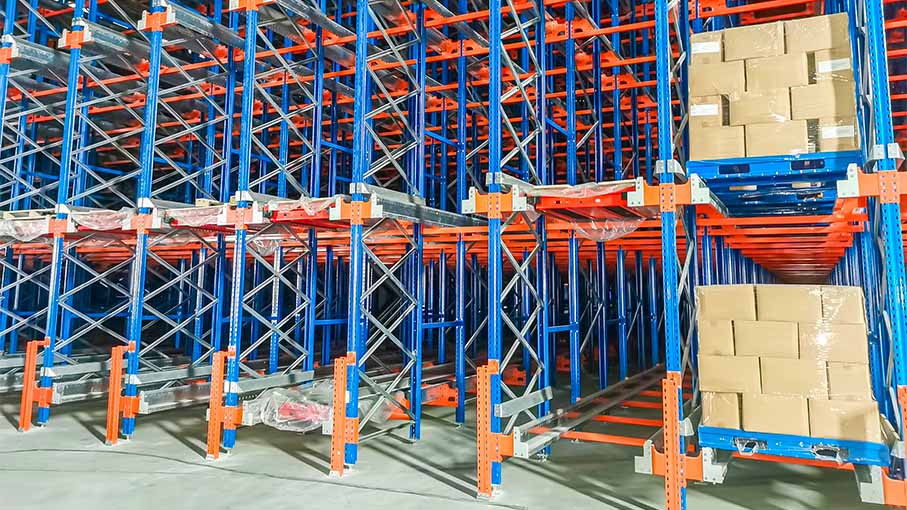
Pallet Shuttle Systems transform how warehouses use available space. Traditional storage methods require multiple aisles for forklift access, which limits the number of pallets that can fit in a facility. By reducing the need for these aisles, Pallet Shuttle Systems allow for deeper racking configurations and better use of vertical space. This approach leads to a significant increase in usable storage area, especially in facilities that handle high volumes of similar products.
Note: Facilities that switch from selective racking to Pallet Shuttle technology often see space utilization jump from 40-50% up to 80-90%. This improvement can nearly double the storage capacity within the same building footprint.
Warehouse managers can store more inventory without expanding their facilities. This advantage becomes especially valuable in urban areas where real estate costs run high. The ability to maximize every square foot helps companies control costs and improve operational efficiency.
A High-Density Racking System plays a key role in maximizing warehouse capacity. Pallet Shuttle Systems support deep lane configurations, which allow multiple pallets to be stored in a single lane. This setup reduces the warehouse storage space footprint by up to 50%. By eliminating the need for multiple access aisles, these systems also simplify warehouse operations.
Shuttle racks use the full depth of storage lanes, increasing pallet density within the same space.
Automated shuttles move pallets in and out of storage, reducing the need for forklifts to enter deep racks.
Cold storage facilities benefit from this design, achieving over 60% reduction in energy consumption due to more efficient space utilization.
Deep-lane storage works well for warehouses and distribution centers that need to store large quantities of similar items.
Pallet Shuttle Systems make it possible to store more products, reduce operational complexity, and lower energy costs—all within the same warehouse.
Pallet Shuttle Systems help warehouses move goods more quickly. Automated shuttles transport pallets deep into storage lanes, so forklift operators only need to place or retrieve pallets at the lane entrance. This process reduces the time spent driving through aisles and waiting for access. As a result, loading and unloading cycles become much faster. Many facilities report up to 40% quicker turnaround times after switching to these systems.
A key reason for this speed is the reduction in manual labor. Automation streamlines workflows and minimizes the need for workers to enter storage lanes. This change not only saves time but also lowers the risk of accidents. The system’s design also reduces forklift traffic, which helps create a safer and more organized environment.
|
Feature |
Impact on Productivity |
|---|---|
|
Automation |
Reduces manual labor and streamlines workflows |
|
Scalability |
Adapts to changing demands without major changes |
|
Energy Efficiency |
Lowers operational costs and enhances performance |
|
Reduced Forklift Traffic |
Minimizes disruptions and creates a safer environment |
|
Real-time Inventory Tracking |
Improves accuracy and reduces stock discrepancies |
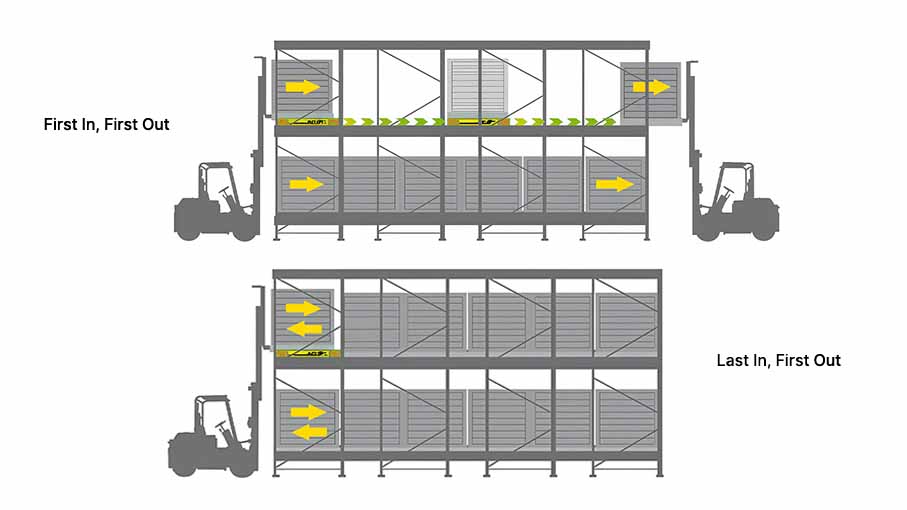
Pallet Shuttle Systems also improve how warehouses manage inventory. Real-time tracking features keep accurate records of every pallet movement. This accuracy reduces stock discrepancies and helps managers make better decisions. The system supports both FIFO (First-In, First-Out) and LIFO (Last-In, First-Out) inventory methods, making it flexible for different storage needs.
Space optimization is another benefit. By maximizing warehouse capacity, these systems allow for efficient storage of goods. Enhanced picking performance leads to more reliable shipments and fewer errors. Smart Warehouse Automation further reduces labor costs by limiting human intervention in daily operations.
|
Key Benefit |
Description |
|---|---|
|
Space Optimization |
Maximizes warehouse capacity for efficient storage of goods |
|
Flexibility |
Supports various inventory management systems like FIFO and LIFO |
|
Automation |
Reduces labor costs by minimizing human intervention in operations |
|
Real-time Tracking |
Maintains accurate records of inventory movements for better management |
|
Enhanced Picking |
Improves picking performance, leading to more reliable shipments |
Note: Improved inventory handling means fewer mistakes, faster order fulfillment, and better customer satisfaction.
Warehouse environments become safer when Pallet Shuttle Systems replace traditional storage methods. These systems use advanced safety features that minimize risks and protect workers from accidents. Sensors detect obstacles and stop shuttles before collisions occur. Automatic shutdown functions activate during emergencies or malfunctions, halting operations quickly. These features help warehouses comply with local safety regulations and standards.
|
Safety Feature |
Description |
|---|---|
|
Advanced Safety Features |
Minimize risks in warehouse environments, safeguarding against accidents. |
|
Collision Prevention Technologies |
Sensors detect obstacles, stopping shuttles to prevent accidents. |
|
Automatic Shutdown Features |
Activates during malfunctions or emergencies to halt operations quickly. |
|
Compliance with Local Regulations |
Ensures legal operation and adherence to safety standards, promoting safety. |
Pallet Shuttle Systems also reduce forklift traffic. Fewer forklifts moving through aisles means fewer workplace accidents. Workers spend less time lifting and moving pallets, which decreases the risk of injuries. These systems help warehouses meet fire safety standards, further reducing hazards.
|
Benefit |
Description |
|---|---|
|
Reduced Forklift Traffic |
Less movement of forklifts leads to fewer accidents in the workplace. |
|
Minimization of Manual Handling |
Decreases the risk of injuries associated with lifting and moving pallets. |
|
Compliance with Fire Safety Standards |
Adherence to safety regulations reduces fire-related risks. |
Pallet Shuttle Systems deliver significant cost savings for warehouse operations. Automation reduces the need for manual labor, which lowers wage expenses. In a traditional warehouse, one operator manages about 8,000 pallet positions. With a shuttle system, one technician can oversee more than 30,000 positions. This change results in annual savings of up to $352,000 for every 100,000 pallet positions.
|
System Type |
Labor Requirement |
Typical Wage |
Annual Cost |
|---|---|---|---|
|
Traditional Warehouse |
1 operator per 8,000 pallet positions |
$22.50/hour + benefits |
$58,500 per operator |
|
Shuttle System Warehouse |
1 technician manages 30,000+ positions |
$32/hour + benefits |
$83,200 per technician |
|
Net Savings |
|
|
$352,000 annually per 100,000 pallet positions |
Energy costs also decrease because these systems use space more efficiently. Fewer aisles and better organization mean less lighting and climate control are needed. Over time, these savings add up, making Pallet Shuttle Systems a smart investment for bulk storage facilities.
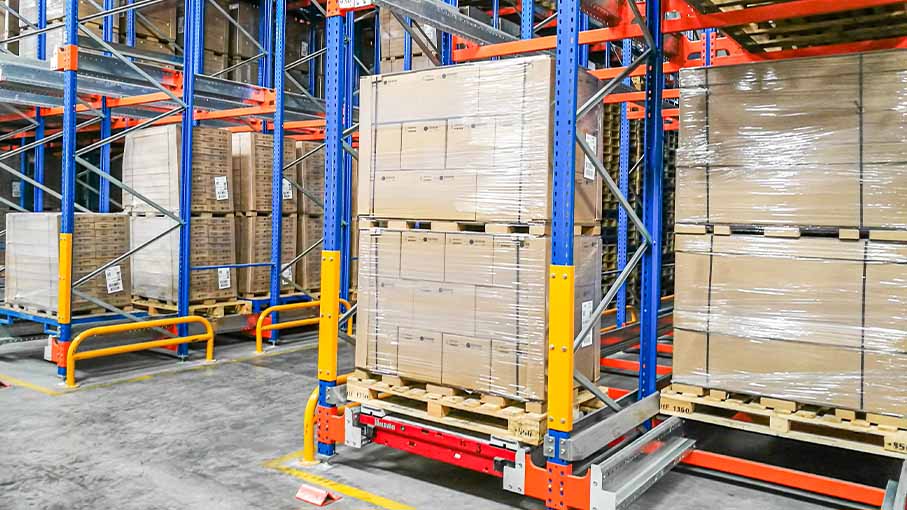
Pallet Shuttle Systems offer remarkable adaptability for warehouses facing changing inventory needs. These systems fit a wide range of racking structures and work well in different warehouse environments. Businesses can scale storage capacity as demand grows, without major disruptions or costly renovations. Operators can quickly adjust layouts to handle seasonal peaks or shifts in product types. This flexibility allows companies to respond efficiently to market changes.
|
Feature |
Description |
|---|---|
|
Flexibility |
Easily adaptable to existing racking structures, suitable for various warehouse environments. |
|
Scalability |
Can be scaled or adjusted to meet future storage requirements and business growth. |
|
High-volume |
Automated systems enhance speed in storage and retrieval, improving overall effectiveness. |
|
Seasonal |
Adapts to changing inventory volumes and layouts, allowing businesses to respond to market shifts. |
Different industries benefit from this adaptability:
General merchandise warehouses handle diverse inventory sizes and turnover rates.
Food and beverage facilities use these systems for FIFO rotation and chilled storage.
Grocery operations achieve high throughput for perishable goods.
Manufacturing sites store bulky items with minimal manual handling.
Healthcare providers secure pharmaceuticals and ensure rapid access.
Pallet Shuttle Systems support seamless growth, letting businesses expand storage without significant reorganization or extra floor space.
Sustainability stands as a core advantage of these systems. Automated pallet movement reduces manual handling, which lowers the risk of product damage and waste. High-density storage maximizes available space, so companies need less warehouse area, reducing their environmental footprint. Energy efficiency improves as fewer aisles mean less lighting and climate control are required. These systems also minimize door openings and optimize airflow, which further cuts energy use.
Reduced energy consumption leads to a smaller carbon footprint.
Gentle handling decreases product waste from damage.
Low-maintenance design conserves resources over time.
Less reliance on diesel forklifts improves warehouse air quality, benefiting worker health.
By optimizing resource use and reducing waste, Pallet Shuttle Systems help warehouses operate more sustainably while supporting business growth.
Pallet Shuttle Systems deliver high storage density, improved efficiency, and lower labor costs. They support flexible inventory management and help facilities scale as business grows. Many warehouses see strong returns on investment and predictable maintenance costs. These systems also enhance safety and reduce energy use.
Companies seeking long-term value and operational excellence should consider Pallet Shuttle Systems for bulk storage. Investing in this technology can transform warehouse performance and support future growth.
Warehouses that store large quantities of similar products see the greatest benefits. Cold storage, food distribution, and manufacturing facilities often choose these systems for their high-density and efficient storage needs.
The system reduces forklift traffic and manual pallet handling. Automated shuttles handle most movements. This setup lowers the risk of accidents and injuries for warehouse staff.
Yes. These systems adjust to various pallet sizes and weights. Operators can configure the system for different products, which adds flexibility to warehouse operations.
No. Most systems require minimal maintenance. Technicians perform routine checks and software updates. The design focuses on reliability and ease of service.
High-density storage reduces warehouse space needs. Automated handling lowers energy use and product damage. These features help companies reduce their environmental impact.



Copyright @ 2026 HUAYIDE All Rights Reserved.
 network supported
Sitemap / Xml / Blog / Privacy Policy
 English
  English
 русский
 ไทย
ไทย Tiếng việt
 中文
中文