The beverage industry is one of the most demanding sectors in global logistics. Liquid products are exceptionally heavy, demand rapid throughput, and are subject to strict expiration dates and seasonal demand spikes. For supply chain managers relying on traditional manual forklifts, these factors create a perfect storm of bottlenecks, high labor costs, and product damage.
So, how do industry leaders keep supermarket shelves stocked flawlessly during the peak summer months? The answer lies in transitioning from manual operations to automation.
Beverages have limited shelf lives. Ensuring that the oldest stock is shipped out first is critical to preventing costly spoilage. In a manual warehouse, operators can easily make errors, grabbing the most accessible pallet rather than the oldest one.
By integrating an Automated Storage and Retrieval System (AS/RS) with a robust Warehouse Management System (WMS), inventory is managed digitally. The software enforces strict First-In, First-Out (FIFO) or First-Expired, First-Out (FEFO) protocols. The system automatically retrieves the exact pallet required based on its production date, ensuring 100% compliance and eliminating dead stock.
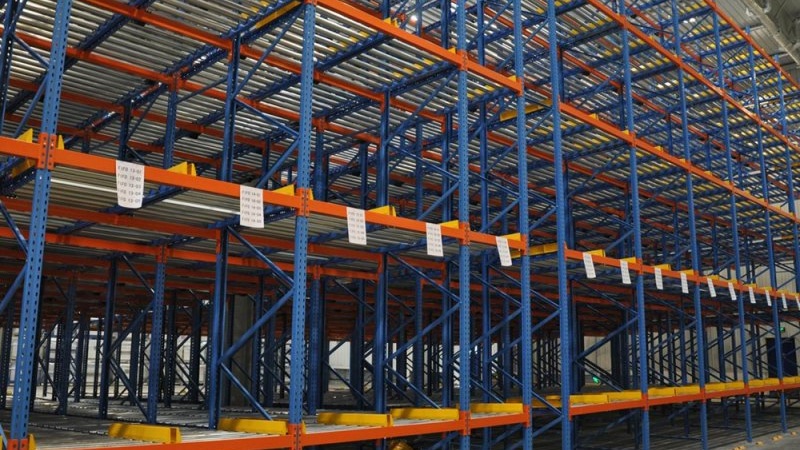
Beverage distribution centers typically handle massive quantities of identical SKUs (e.g., hundreds of pallets of the same bottled water or cola). Traditional selective racking wastes too much space on forklift aisles.
For this specific scenario, radio shuttle racking is the ultimate game-changer. This semi-automated or fully automated deep-lane storage system uses robotic shuttles to carry pallets deep into the racking structure. It allows you to store pallets up to 20 or 30 deep, drastically increasing storage density by eliminating forklift aisles, all while maintaining high throughput.
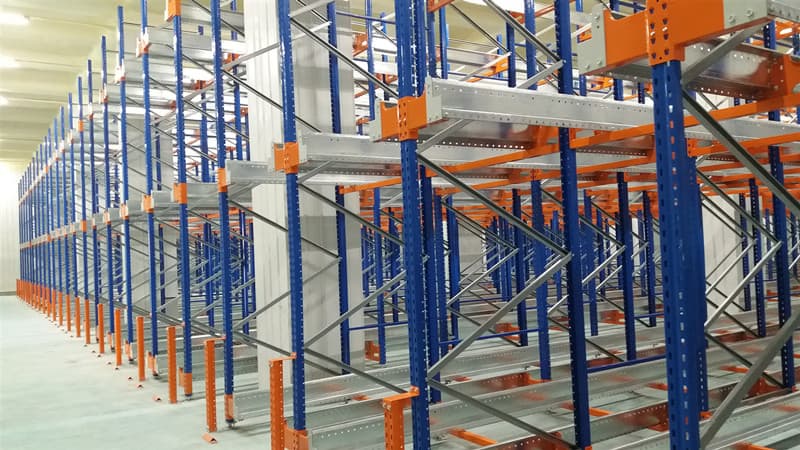
A standard pallet of canned or bottled beverages easily exceeds 1,000 kg (2,200 lbs). Operating heavy forklifts at high speeds to meet delivery deadlines creates a severe safety hazard. Accidental collisions with racks or dropped pallets result in massive product loss and messy cleanups.
Huayide engineers heavy duty automated storage systems built with premium, high-yield steel designed to withstand extreme dynamic loads. Automated stacker cranes glide on precise rails, moving multiton beverage pallets safely and smoothly at speeds no human driver could safely match, drastically reducing product damage and workplace accidents.
Beverage sales are highly seasonal. A heatwave can cause orders to triple overnight. In a traditional setup, handling this surge means hiring temporary workers who are unfamiliar with the warehouse layout, leading to slower picking times and higher error rates.
Automated systems decouple your throughput capacity from your labor pool. When demand spikes, your AS/RS and shuttle systems simply run faster and longer—even 24/7 in a "lights-out" environment—ensuring that your distribution network never misses a delivery window.
Upgrading a beverage distribution center requires a partner who understands the physics of heavy liquid storage and the software of high-speed FMCG logistics.
From our origins as a racking pioneer in 1993 to our current status as a global automation leader, Huayide provides the reliability and innovation your supply chain needs.



Copyright @ 2026 HUAYIDE All Rights Reserved.
 network supported
Sitemap / Xml / Blog / Privacy Policy
 English
  English
 русский
 ไทย
ไทย Tiếng việt
 中文
中文