Shuttle Racking for High-Density Pallet Storage
HUADE shuttle racking provides high-density pallet storage with precision shuttle rails, smooth pallet movement, and efficient space utilization for semi-automated and fully automated warehouses.
Shuttle Racking Overview
What is Shuttle Racking?
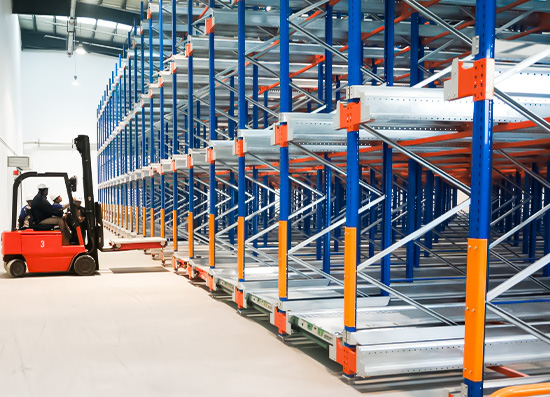
Shuttle racking is a high-density pallet storage solution that uses electric shuttles to move pallets inside deep storage lanes. The setup combines heavy-duty racking, dedicated shuttle rails, electric shuttle vehicles, storage positions, control equipment, and safety components.
The shuttle moves along the rails to store, retrieve, and reposition pallets without requiring forklifts to enter the storage lanes. Forklifts operate at the lane entrance, while the shuttle handles pallet movement inside the rack.
By using deep storage lanes and reducing the number of forklift aisles, shuttle racking makes better use of available warehouse space. It combines dense pallet storage with automated pallet movement, making it suitable for warehouses that handle large volumes of palletized goods.
Shuttle Racking Components
A shuttle racking installation combines the rack structure, shuttle equipment, control components, and safety devices to create a stable and efficient deep-lane storage environment. A typical storage lane provides 4–10 pallet positions in depth. HUADE can also customize longer lanes according to the available warehouse space, pallet requirements, and storage capacity targets.
Heavy-duty rack structure
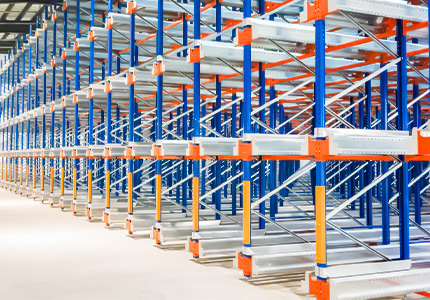
Includes upright frames, load beams, rail beams, bracing, leg guards, and rack protection barriers. These components provide the structural strength and stability required for dense pallet storage.
Dedicated shuttle rails
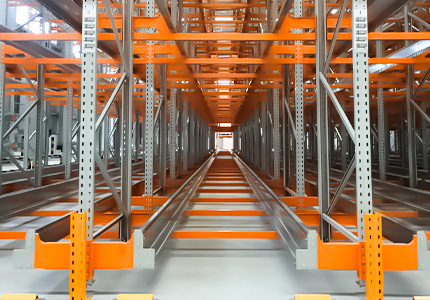
Guide the shuttle through each storage lane and maintain the alignment required for smooth pallet movement.
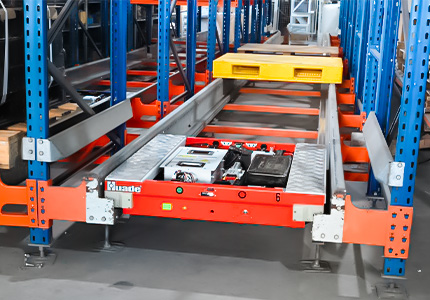
Electric shuttle vehicle
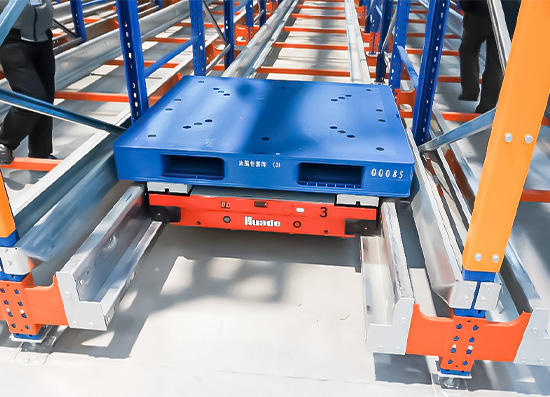
Battery-powered and controlled wirelessly, the shuttle moves pallets into and out of deep storage positions without requiring a forklift to enter the lane.
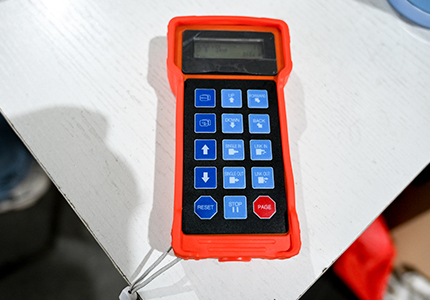
Remote control and control equipment
Handheld controllers, positioning sensors, and control devices allow operators to manage shuttle movements and monitor storage operations.
Optional automation equipment
Depending on the warehouse layout and automation requirements, the solution can integrate with lifts, level-changing mechanisms, and a WMS for coordinated inventory and storage management.
Safety components
End-of-lane protection, travel limit devices, and braking functions help control shuttle movement and protect both equipment and stored goods.
How Shuttle Racking Works?
Shuttle racking uses dedicated rails installed inside each storage lane. Pallets rest on the rail-supported storage positions, while the radio shuttle enters the lane and moves pallets according to operating commands. It can move pallets forward and backward, position them in storage locations, organize inventory, and retrieve pallets for outbound handling.
Depending on the shuttle configuration and warehouse requirements, shuttle racking can support different operating modes:
One-Way Shuttle Racking
The shuttle moves in one direction within the storage lane and typically supports LIFO inventory management. It suits batch storage and high-density storage of large quantities of the same or similar products.
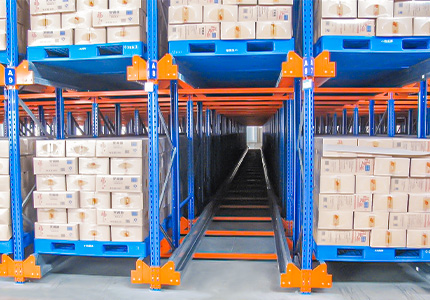
Two-Way Shuttle Racking
The shuttle can operate from both ends of the storage lane, providing more flexible pallet access and supporting different inbound and outbound workflows.
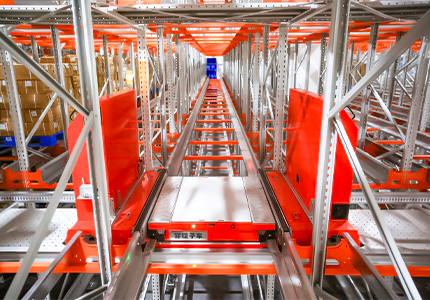
Four-Way Shuttle Racking
The shuttle can travel both longitudinally and transversely, allowing it to change levels and serve multiple storage lanes. This configuration supports more flexible warehouse automation and multi-lane pallet handling.
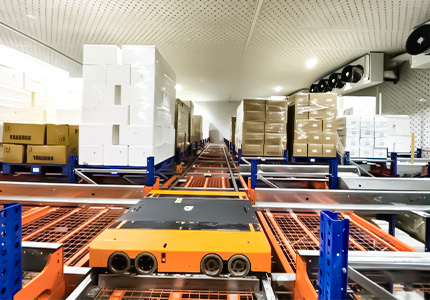
Key Benefits of Shuttle Racking
High Space Utilization
Shuttle racking uses deep storage lanes to reduce forklift aisles and increase pallet storage density. A typical lane can accommodate 4–10 pallet positions in depth, while HUADE can customize deeper lanes according to warehouse dimensions, pallet specifications, and storage requirements. This compact layout helps make better use of available floor space and warehouse volume.
Safer Storage Operations
Forklifts do not need to enter the storage lanes. The radio shuttle handles pallet movement inside the rack, reducing the risk of forklift collisions with rack uprights and beams. This layout helps reduce rack damage and potential product loss caused by forklift operations inside storage lanes.
Lower Handling Time and Operating Costs
By keeping forklifts outside the storage lanes, shuttle racking reduces unnecessary forklift travel and handling operations. The radio shuttle performs pallet movement within the rack, helping reduce manual handling requirements and improve storage efficiency. For warehouses with high pallet volumes, this can reduce repeated forklift movements and associated operating costs.
Stable and Efficient Inbound and Outbound Operations
The radio shuttle performs pallet movement inside the storage lane according to operating commands, providing consistent handling performance for batch storage and retrieval. With 4–10 pallet positions per typical lane, the solution supports dense storage while keeping forklift operations concentrated at the lane entrance.
Suitable for Low-Temperature Cold Storage
Shuttle racking can be configured for low-temperature and cold-chain applications, with options adapted to specific environmental requirements such as freeze-resistant and moisture-resistant components. Keeping forklifts outside the storage lanes can also reduce unnecessary forklift travel inside temperature-controlled areas.
Flexible Investment for High-Density Storage
Shuttle racking provides a level of automation between conventional manual racking and fully automated AS/RS. It can increase storage density and reduce manual handling without requiring every storage movement to be fully automated. Actual investment and payback depend on factors such as warehouse size, storage capacity, throughput, equipment configuration, and operating conditions.
Flexible FIFO and LIFO Storage
Shuttle racking can support FIFO (First In, First Out) or LIFO (Last In, First Out) inventory strategies according to the rack configuration and warehouse workflow. This makes it suitable for batch-based storage of palletized goods across industries such as FMCG, food and beverage, rubber, chemicals, and pharmaceuticals.
Scalable Shuttle Capacity
The storage structure can accommodate additional radio shuttle units as handling requirements increase. Adding shuttle units can increase the number of pallets that can be processed within the storage lanes, allowing the warehouse to scale handling capacity according to operational demand.
Shuttle Racking Automation Options
Shuttle racking can support both semi-automated and fully automated warehouse operations, depending on the required level of automation, throughput, and system integration.
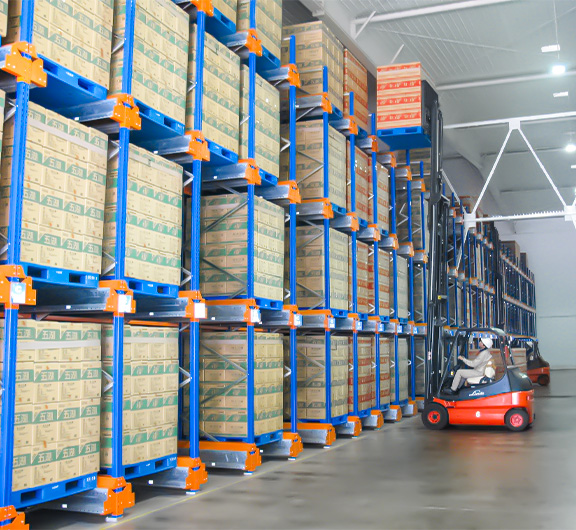
Semi-Automated Shuttle Racking
Semi-automated shuttle racking combines radio shuttles with forklifts. Forklifts transport pallets to the rack entrance, while the radio shuttle performs storage and retrieval inside the lane. Operators control the shuttle remotely without entering the storage lane.
- Main components: High-density racking, two-way radio shuttle, and wireless remote control.
- Storage modes: Supports FIFO (First In, First Out) and LIFO (Last In, First Out).
- Applications: Food and beverage, pharmaceuticals, cold storage, military supplies, machinery, appliances, metallurgy, ports, airports, and commercial warehousing.
Fully Automated Shuttle Racking
Fully automated shuttle racking integrates radio shuttles, conveyors, lifts, and WMS/WCS to automate pallet storage and retrieval.
- Inbound Process: Pallets are checked, scanned, and assigned storage locations by the WMS before entering the rack area.
- Storage Management: WMS coordinates pallet storage, batch allocation, and inventory updates with the ERP system.
- Key Requirements: The solution requires precise control of rack stability, load capacity, shuttle positioning, and dynamic performance.
- Applications: Ideal for high-density warehouses requiring automated pallet handling and integrated inventory management.
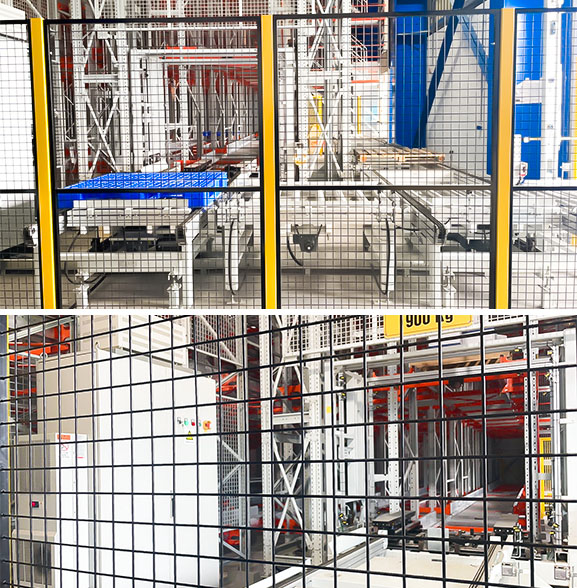
Semi-automated or fully automated? Take a closer look and find the shuttle racking approach that matches your warehouse needs.
Whatsapp: +86 18652003451
Tell us your storage requirements, and HUADE can help you explore the right shuttle solution and warehouse layout for your operation.
Is Shuttle Racking Right for Your Warehouse?
Shuttle racking is not suitable for every warehouse. It works particularly well for high-density storage, large pallet volumes, and semi-automated operations. Consider the following factors before choosing a solution.
Product Characteristics
- Large volumes, fewer SKUs: Ideal for food, beverages, chemicals, tobacco, and standard parts.
- Standardized pallets: Consistent pallet sizes support smooth and reliable shuttle operation.
- Full-pallet handling: Well suited to pallet-in/pallet-out operations and FIFO or LIFO storage.
Warehouse Conditions
- Limited space: Helps increase pallet storage capacity within a compact warehouse footprint.
- Higher clear height: Warehouses with 5 m or more of clear height can make better use of vertical space.
- Suitable floor conditions: Sufficient load capacity and floor flatness help ensure stable shuttle operation.
Operational Requirements
- Lower handling costs: Reduces forklift travel, manual handling, and unnecessary aisle requirements.
- Higher storage density: Maximizes pallet storage capacity within the available warehouse space.
- Cold storage: Supports temperature-controlled warehouses with suitable low-temperature rack and shuttle configurations.
Explore More HUADE Racking Systems
Explore other HUADE racking solutions designed for different storage densities, access requirements, and warehouse layouts.
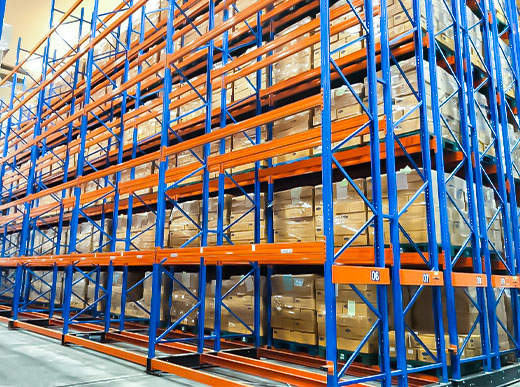
Mobile Pallet Racking
Reduces fixed aisles and increases storage capacity by moving rack rows when access is needed.
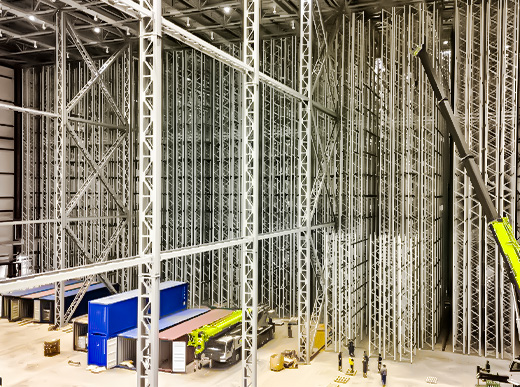
High Bay Warehouse Racking
Makes full use of vertical warehouse space for high-capacity pallet storage.
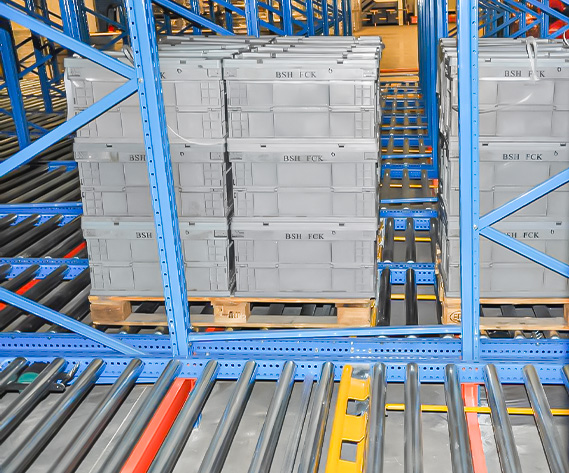
Pallet Flow Rack
Designed for high-density FIFO pallet storage and efficient inventory rotation.
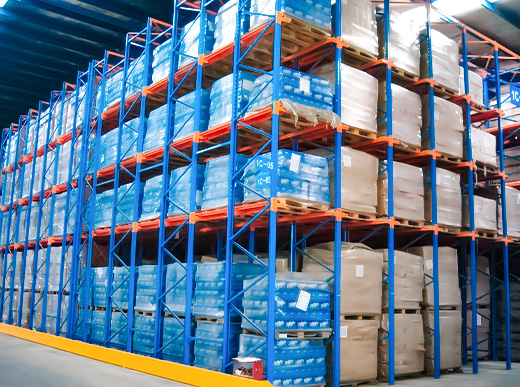
Drive-In Rack
A high-density solution for large-volume, low-SKU storage with LIFO operation.
Why Choose HUADE for Your Shuttle Racking Solution?
With proven expertise and years of experience, HUADE provides professional shuttle racking solutions tailored to each customer’s needs.
-
Tested Before Delivery
Our testing facilities cover beam-to-upright connections, uprights, beam load capacity, computer modeling, and full-scale rack unit testing. Independent third-party verification is also available when required.
-
Designed Around Your Warehouse
We design each racking solution around your pallet dimensions, SKU characteristics, warehouse layout, and operating requirements to ensure the system fits your actual application.
-
Quality You Can Review
Before shipment, HUADE can provide testing videos and relevant documentation for your review, giving you greater visibility into system performance before delivery.
-
One-Stop Project Support
From engineering and design to manufacturing, installation, and commissioning, HUADE coordinates the key stages of your warehouse project through one integrated service.
-
Turnkey Solution Delivery
We can also support subcontractor coordination and permitting requirements, helping connect racking, automation, and site execution into a complete warehouse solution.
Frequently Asked Questions
Shuttle racking uses a combination of heavy-duty racks, shuttle vehicles, dedicated guide rails, and a control system. During storage, a forklift places the pallet at the entrance of the storage lane, and the shuttle moves the pallet along the rails to the assigned storage position. For retrieval, the shuttle brings the selected pallet back to the lane entrance for forklift pickup.
The forklift does not need to enter the storage lane, while the operator can control the shuttle through a remote controller or an integrated warehouse control system.
Drive-in racking requires a forklift to enter the storage lane to place and retrieve pallets. This limits the operating space inside the lane and requires careful forklift operation.
With shuttle racking, the shuttle vehicle handles pallet movement inside the lane while the forklift operates mainly at the lane entrance. This reduces forklift travel inside the rack structure and can improve operational safety, storage density, and handling efficiency.
Standard shuttle racking typically operates as a semi-automated pallet storage solution, with shuttle vehicles working together with forklifts. For higher levels of automation, HUADE can integrate shuttle vehicles with conveyors, lifts, WMS/WCS, and other material handling equipment to create a more automated pallet storage and retrieval process.
Shuttle racking can significantly increase pallet storage capacity by reducing the number of forklift aisles and making better use of the available warehouse space. Compared with conventional selective pallet racking, the actual capacity improvement depends on factors such as warehouse dimensions, pallet size, storage depth, rack height, aisle requirements, and inventory characteristics.
HUADE can evaluate your existing warehouse layout and storage requirements to determine the achievable capacity.
Yes. Shuttle racking can be designed for cold storage and other low-temperature warehouse environments. The shuttle vehicle, battery, electrical components, and protection measures need to match the required operating temperature and working conditions.
HUADE operates dedicated testing facilities, including a battery test center and a -25°C cold storage test center. HUADE also develops and manufactures its shuttle vehicles in-house, allowing the equipment configuration to be adapted to specific low-temperature operating conditions.
Yes. Shuttle racking can support both FIFO (First-In, First-Out) and LIFO (Last-In, First-Out) inventory strategies. The appropriate storage method depends on the rack configuration, lane access, product characteristics, and warehouse operating process.
For example, LIFO works well for batch storage where the most recently stored pallets are retrieved first, while FIFO is suitable for products that require tighter stock rotation.
A shuttle vehicle failure should be considered when designing a reliable shuttle racking solution. HUADE can configure recovery procedures and dedicated rescue equipment to remove a disabled shuttle from the storage lane.
This allows maintenance personnel to recover the vehicle and restore lane operation without relying on manual entry into the rack structure.
The return on investment depends on the project rather than a fixed payback period. Key factors include storage capacity, warehouse rental or expansion costs, labor requirements, forklift utilization, throughput, operating temperature, and the required level of automation.
For this reason, HUADE recommends evaluating the investment against the total cost of the existing or alternative storage solution rather than using a general payback period as the sole benchmark.
Yes. Shuttle racking can be used for brownfield warehouse upgrades as well as new warehouse projects. Its modular rack structure can be designed around existing building dimensions, available height, floor conditions, pallet specifications, and operational requirements.
Before installation, HUADE evaluates the existing warehouse structure, floor conditions, clear height, fire protection requirements, access points, and equipment operating space to determine a suitable layout.
Yes. HUADE can integrate shuttle racking operations with warehouse management and control systems through standard communication interfaces. Depending on the project, the solution can connect with existing WMS or ERP platforms directly or use WCS as an intermediate control layer.
This integration can support functions such as inventory synchronization, storage location assignment, task management, and automated equipment control.
Yes. A shuttle racking solution can be designed with future expansion in mind. Depending on the original layout and system configuration, expansion may include adding shuttle vehicles, extending storage lanes, adding storage levels, or integrating additional material handling equipment.
For operations with significant seasonal demand, additional shuttle vehicles can also provide greater flexibility when higher throughput is required.