Skip to content

VNA Racking for High-Density Warehouse Storage

HUADE designs and delivers VNA Racking systems that maximize warehouse capacity. By reducing aisle width and utilizing vertical space, our solutions help you store more pallets, access every pallet directly, and improve warehouse operating efficiency.

VNA Racking Overview

What is VNA Racking?

VNA Racking (Very Narrow Aisle Racking) is a high-density pallet storage system designed to maximize warehouse capacity by reducing aisle width. Compared with conventional pallet racking, VNA pallet racking uses specialized three-way forklifts operating in aisles as narrow as 1.5–2.0 meters, significantly improving space utilization and storage density.

Also known as very narrow aisle racking or narrow aisle warehouse racking, this system increases pallet positions while maintaining 100% direct pallet access. By optimizing both horizontal and vertical space, it can improve storage capacity by up to 40% compared with traditional pallet rack layouts.

The solution is widely used in distribution centers, manufacturing warehouses, cold storage facilities, third-party logistics (3PL), food and beverage warehouses, pharmaceutical storage, and other high-throughput environments requiring efficient pallet storage and fast order fulfillment.

Structure of VNA Racking

VNA racking systems are mainly composed of the following structural components:

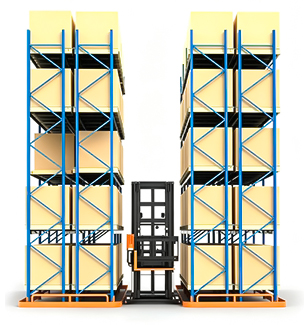
VNA Racking with Three-Way Forklift
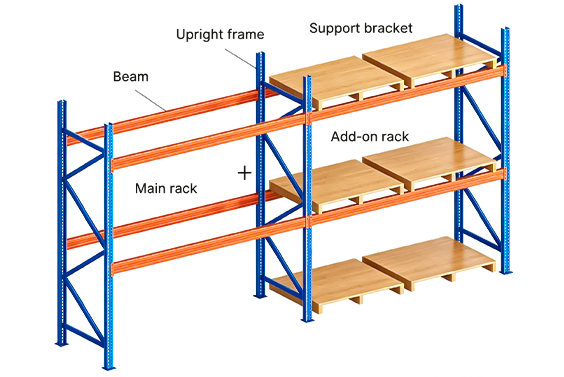
VNA Racking structure showing upright frames, beams, main frames, extension frames, and pallet supports

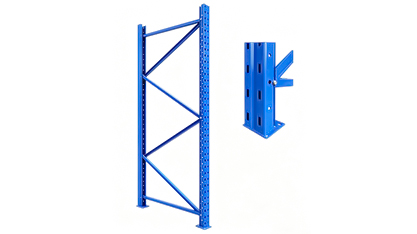
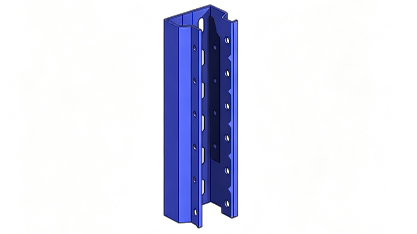
Uprights

Uprights are the primary vertical supports of the system. They are typically assembled with upright frames, diagonal bracing, and horizontal bracing to support pallet loads and maintain structural stability. Manufactured from Baosteel steel, they are available in various profiles to meet different load-bearing requirements.

Standard section size:
85*67 90*70 100*67 100*95 120*95

VNA Racking Upright

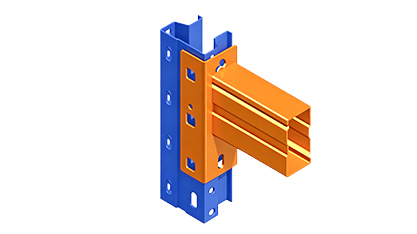
Beams are installed horizontally between uprights to support pallets and define storage levels. Their height can be easily adjusted to accommodate different pallet sizes and storage requirements, providing flexible configuration for various applications.

Standard section size:
80*50 90*50 100*50 110*50 120*50 140*50 160*50

Horizontal and diagonal bracing improve the rack’s rigidity and structural stability, helping prevent deformation under heavy pallet loads.

Standard section size:
85*67 90*70 100*67 100*95 120*95

VNA Racking Frame Bracing

Backstops are installed at the rear of pallet positions to prevent pallets from overextending beyond the rack structure during forklift operations, improving warehouse safety and pallet positioning accuracy.

Guide rails installed on the warehouse floor help guide VNA forklifts safely through narrow warehouse aisles. The guide rail system improves forklift travel accuracy, reduces rack collision risks, and ensures stable narrow aisle forklift operation.

Additional accessories such as pallet supports, safety locks, rack protectors, and fire protection beams further improve warehouse safety and operational reliability within high-density storage environments.

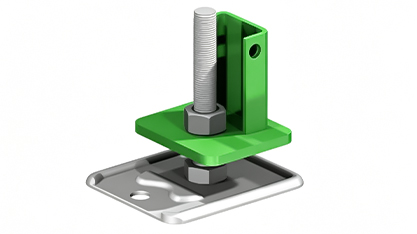
Footplates are fixed to the warehouse floor to distribute loads evenly and stabilize the rack structure. Adjustable footplates can also compensate for minor floor unevenness.

VNA Racking Floor Flatness Requirements

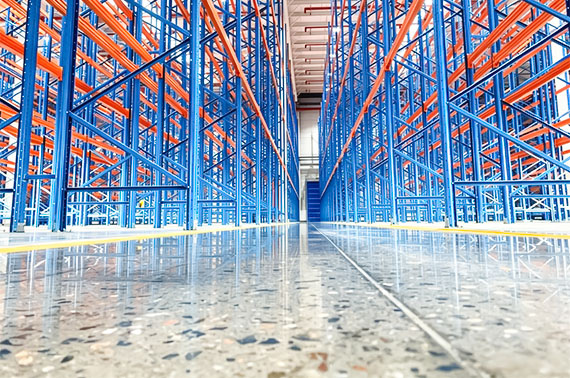
The performance and productivity of a VNA warehouse depend heavily on floor conditions, particularly floor flatness. The sub-base and floor slab must provide sufficient structural support and maintain the required tolerances under load. Proper floor preparation helps forklifts travel accurately through narrow aisles and ensures stable rack operation.

When implementing this type of warehouse, businesses should evaluate floor flatness and load-bearing conditions according to applicable standards. Commonly referenced standards include:

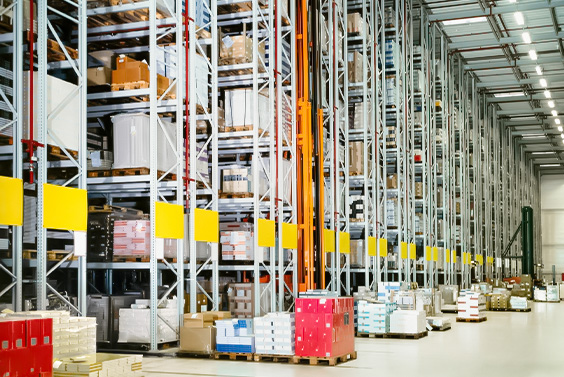
Smooth and level warehouse floor beneath HUADE VNA Racking

For new or renovated warehouses, HUADE assesses floor conditions and helps define the right specifications before VNA Racking installation.

Key Benefits of VNA Racking

Higher Warehouse Space Utilization

VNA Racking reduces aisle widths to approximately 1.6–2.0 meters, much narrower than traditional pallet racking. This layout saves aisle space while making better use of vertical capacity, allowing more pallet positions within the same warehouse footprint.

Increased Storage Density for Pallet Warehouses

As a high-density pallet storage solution, this system allows more palletized goods to be stored per square meter. Its compact layout is ideal for warehouses with large inventory volumes and standardized pallet sizes, including raw materials, finished goods, distribution, cold storage, and FMCG.

Faster Pallet Picking Efficiency

Combined with specialized three-way forklifts, the system provides 100% direct pallet access. Forklifts can access individual pallet positions without moving other loads, improving handling efficiency and reducing storage and retrieval time.

Safer VNA Forklift Operation

Guide rails installed along the aisle floor help keep forklifts accurately aligned during operation. This guidance system reduces the risk of collisions with rack uprights, improving warehouse safety and protecting both goods and rack structures.

Flexible VNA Racking Configuration

Beam heights and rack levels can be adjusted to accommodate different pallet sizes, product dimensions, and load capacities. HUADE offers customized configurations with various upright profiles, beam specifications, and warehouse layouts to meet different storage requirements.

Lower Warehouse Operating Costs

By increasing storage density and making better use of available space, the solution can reduce unit storage costs and the need for warehouse expansion. It is particularly suitable for facilities with limited floor space or high land costs.

Working Principle of VNA Racking

The working principle of VNA racking is based on narrow aisle warehouse operation, guided forklift movement, and selective pallet access.

Forklift Guidance System

VNA racking systems use forklift guidance systems to ensure safe and accurate movement within narrow aisles. These systems help reduce rack collision risks and improve operational efficiency.There are three common guidance methods used in VNA warehouse racking systems:

Mechanical rail guidance system for VNA racking with steel guide rails installed along the warehouse aisle

A. Mechanical Rail Guidance

The forklift is mechanically guided between two steel guide rails securely bolted to the warehouse floor. Typically, 2–3 guide rollers are fitted to each side of the forklift chassis. These rollers run along the guide rails, keeping the forklift accurately centered within the aisle and ensuring stable, controlled travel during VNA operations.

B. Wire Guidance System

The wire‑guidance system is normally fitted by the forklift supplier. A guide wire buried along the aisle centreline creates an electromagnetic field picked up by forklift sensors. Deviations trigger automatic steering correction to keep the truck safely aligned in the narrow aisle.

HUADE VNA Racking with a forklift operating along a wire-guided narrow aisle
HUADE VNA Racking with embedded steel guide rails installed in the warehouse floor

C. Embedded Rail Guidance

Embedded‑rail guidance features steel rails set into the warehouse floor and fixed via secondary concrete pouring. Usually installed by civil contractors, it delivers fixed guidance paths for VNA forklifts in narrow aisles.

Compared with embedded‑rail guidance, wire guidance is more widely adopted for VNA warehouses for its accurate, smooth guiding performance.

Three-Way Forklift Operation

VNA pallet racking requires specialized three-way forklifts capable of rotating forks within narrow aisles. The forklift forks can rotate and move laterally, allowing direct pallet access on both sides of the aisle without turning the forklift body.

3D illustration of a three-way forklift operating between HUADE VNA Racking aisles

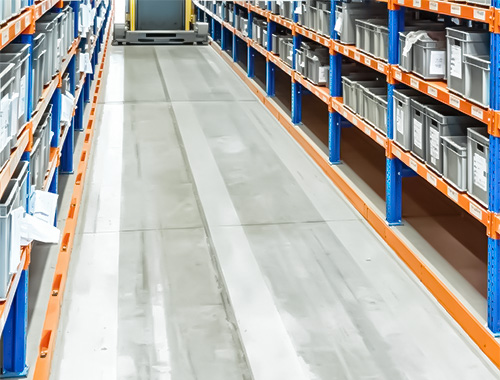
With aisle widths typically between 1.6 and 2.0 meters, VNA forklifts travel directly through guided narrow aisles to complete pallet storage and retrieval operations. This narrow aisle design significantly increases warehouse storage density compared with conventional pallet racking systems.

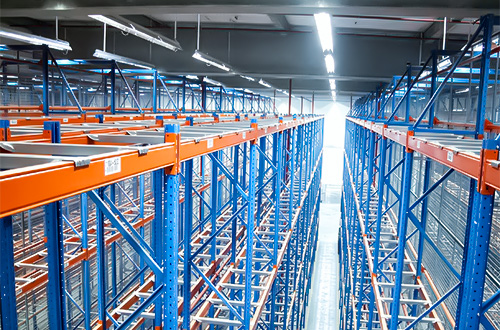
Top view of a narrow aisle between two rows of HUADE VNA Racking

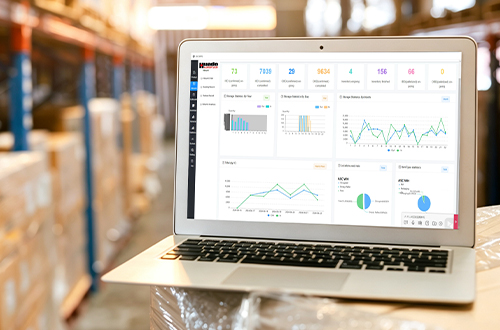
VNA racking supports both FIFO (First-In, First-Out) and LIFO (Last-In, First-Out) inventory management methods. Integrated with warehouse management systems (WMS), the system enables accurate pallet tracking, high picking efficiency, and optimized warehouse operations.

WMS interface for pallet tracking and inventory management
Can You Store More Without Expanding Your Warehouse?

VNA Racking makes better use of your floor space and building height while maintaining direct access to individual pallets.

Let’s Optimize Your Warehouse

Whatsapp: +86 18652003451

Tell us your warehouse size, pallet dimensions, storage requirements, and forklift configuration. HUADE will help you evaluate whether VNA Racking is the right solution and develop a layout tailored to your operation.

Is VNA Racking Suitable for Your Warehouse?

Choosing VNA Racking depends on your warehouse space, operations, forklift requirements, and floor conditions.

Limited Warehouse Space

VNA Racking is ideal for warehouses with limited floor space and sufficient building height. Narrower aisles and greater vertical capacity help increase pallet positions without expanding the warehouse footprint.

High Throughput Warehouse Operations

This solution suits distribution centers, manufacturing warehouses, supermarket logistics centers, and other facilities with frequent pallet movement. It supports efficient pallet storage and retrieval for high-throughput operations.

High Selective Pallet Access Requirements

The system provides direct access to individual pallet positions, making it suitable for frequent picking and precise inventory management. Combined with three-way forklifts and WMS, it supports efficient order fulfillment and SKU management.

Abstract icon representing VNA forklift operations in narrow aisles

Dedicated VNA Forklift Operations

Specialized three-way forklifts operate within guided narrow aisles. Warehouses equipped for dedicated VNA forklift operations can benefit from high-density pallet storage and efficient narrow-aisle handling.

High Warehouse Efficiency Requirements

This solution is ideal for warehouses seeking higher storage density, efficient pallet handling, and lower operating costs. It is widely used in e-commerce, pharmaceutical, automotive, food, and logistics applications.

Superflat Warehouse Floor Requirements

Proper floor flatness is essential for safe forklift movement and stable high-bay operation. The floor must provide sufficient support and meet required tolerances under load. Common standards include TR34, TR34 Appendix C, CEN 15620, DIN 15185, and ACI Fmin100.
Explore More High-Density Warehouse Racking Solutions

Looking for a different storage approach? Explore our high-density racking solutions for various warehouse needs.

Mobile Pallet Racking

Maximize floor space by reducing the number of fixed aisles while maintaining direct access to stored pallets.
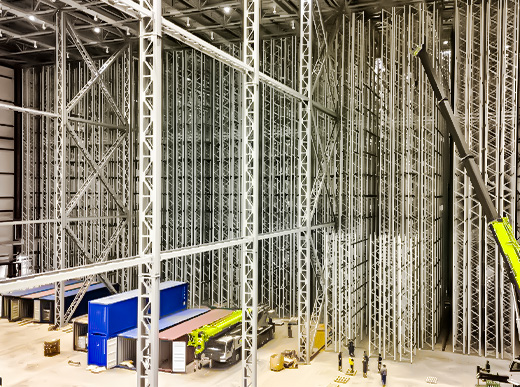
High Bay Warehouse Racking

Make full use of warehouse height with high-level pallet storage designed for large storage capacities.
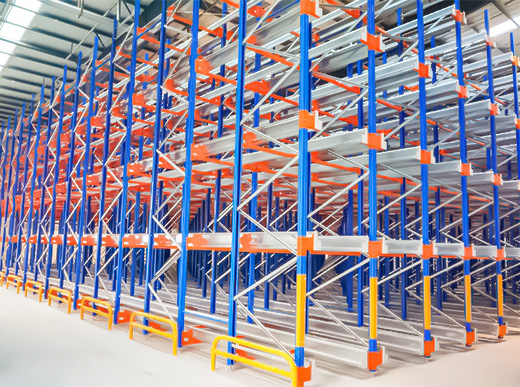
HUADE Shuttle Racking

Shuttle Racking

Increase storage density with deep-lane pallet storage and automated shuttle movement, ideal for high-volume inventory.
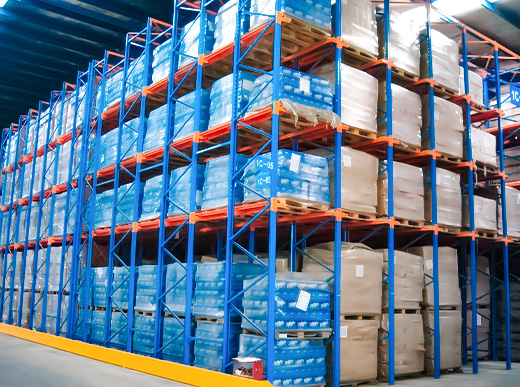
Drive-In Rack

Achieve high-density pallet storage with fewer aisles, making it suitable for large quantities of similar products.

Why Choose HUADE for Your VNA Racking Solution?

With proven expertise and years of experience, HUADE provides professional VNA Racking solutions tailored to each customer’s needs.

  • Extensive Project Experience

    HUADE has extensive experience in designing and implementing VNA racking systems for manufacturing warehouses, logistics centers, cold storage facilities, and distribution centers worldwide.We provide customized VNA warehouse storage systems for logistics and manufacturing industries.

  • Customized Warehouse Storage Solutions

    We provide customized VNA pallet racking solutions based on warehouse layout, pallet dimensions, load capacity, forklift operation requirements, and storage density goals.

  • High-Quality Steel Materials

    HUADE uses high-quality steel materials and strict manufacturing standards to ensure the strength, durability, and long-term stability of every VNA racking system.

  • Professional Technical Support

    Our experienced engineering team provides professional support throughout the entire project process, including warehouse planning, rack design, system optimization, installation guidance, and after-sales service.

  • Efficient High-Density Storage Solutions

    HUADE specializes in high-density warehouse storage systems that help customers maximize warehouse space utilization, increase pallet storage capacity, and improve operational efficiency.

  • Complete Warehouse System Integration

    We can integrate VNA racking systems with forklifts, warehouse management systems (WMS), pallet conveyors, and other warehouse automation equipment to create efficient warehouse storage solutions.

Frequently Asked Questions

1. What is VNA racking and how does it work?

VNA racking (Very Narrow Aisle Racking) is a high-density pallet racking system designed to maximize warehouse storage capacity by reducing aisle width. The system uses specialized three-way forklifts operating within narrow aisles to store and retrieve pallets efficiently while maintaining 100% direct pallet access.

2. What products are suitable for VNA pallet racking?

VNA pallet racking is suitable for standardized pallets, palletized goods, and products with stable dimensions and large SKU quantities. It is widely used in logistics warehouses, distribution centers, cold storage facilities, food warehouses, pharmaceutical storage, and manufacturing warehouses.

3. What forklift is used for VNA racking?

VNA warehouse racking systems typically use specialized three-way forklifts. These forklifts are designed for narrow aisle operations and can rotate forks to access pallets on both sides of the aisle without turning the forklift body.

4. What aisle width is required for VNA racking?

The aisle width of VNA racking systems is typically between 1.5 and 2.0 meters, depending on the forklift type, pallet dimensions, and warehouse layout requirements.

5. What floor flatness standards are required for VNA racking?

VNA racking requires superflat warehouse floors to ensure safe forklift operation and accurate pallet handling. Common floor flatness standards include TR34, TR34 Appendix C, CEN15620, DIN 15185, and ACI Fmin100.

6. Is VNA racking suitable for old warehouse renovation projects?

VNA racking can be installed in renovated warehouses if the building height, floor flatness, and floor load-bearing capacity meet the system requirements. In many cases, old warehouse floors may require grinding or superflat concrete treatment before installation.

7. Is VNA racking suitable for high-frequency warehouse operations?

Yes. VNA pallet racking is designed for warehouses with frequent pallet storage and retrieval operations. Combined with three-way forklifts and warehouse management systems (WMS), the system can achieve high picking efficiency and fast order fulfillment.

8. Does VNA racking support FIFO inventory management?

Yes. VNA warehouse racking systems support both FIFO (First-In, First-Out) and LIFO (Last-In, First-Out) inventory management methods, depending on warehouse operation requirements.

9. What are the advantages of VNA racking compared with traditional pallet racking?

Compared with traditional pallet racking systems, VNA racking offers higher storage density, improved warehouse space utilization, more pallet positions, and efficient selective pallet access while maintaining operational flexibility.

10. Can VNA racking be integrated with warehouse management systems?

Yes. VNA racking systems can be integrated with warehouse management systems (WMS), barcode systems, pallet conveyors, and other warehouse automation equipment to improve inventory accuracy and warehouse operational efficiency.